
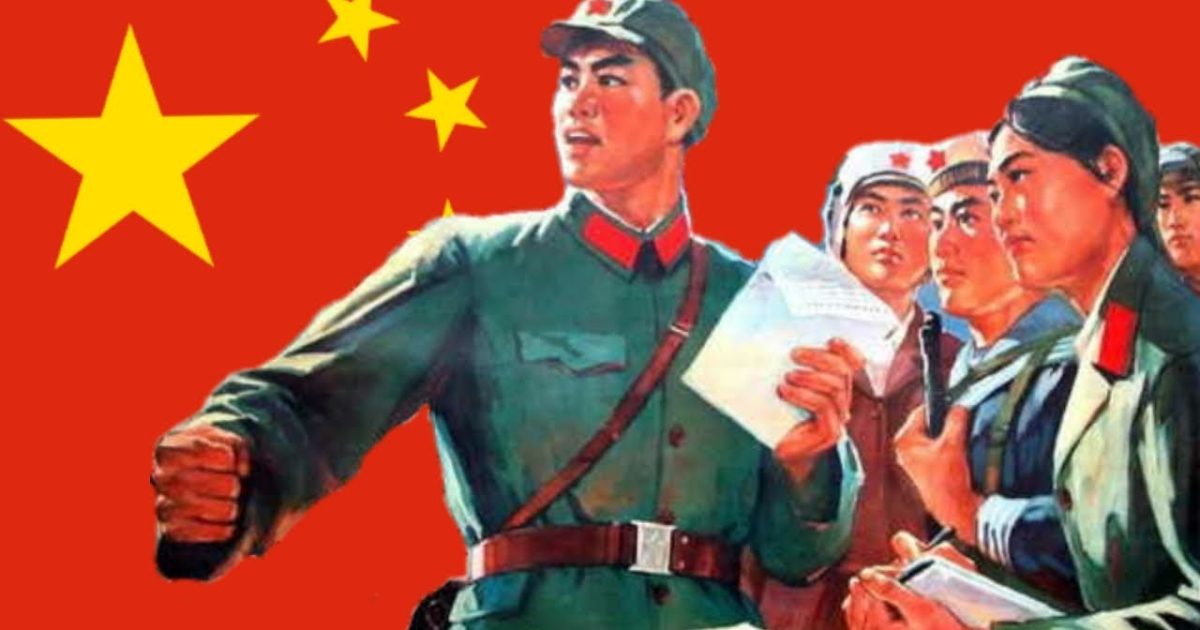


The People’s Liberation Army has released new political regulations as Chinese leader Xi Jinping pushes for greater Party loyalty, a move that may mark a critical step in preparing the military for a potential war with the United States over Taiwan. The new rules formalize how Communist Party organizations conduct elections inside the armed forces, reinforcing institutional Party control over military governance.
They standardize the selection of Party delegates and leadership bodies at every level of the military, embedding Party authority directly into the PLA’s internal structure and ensuring that political oversight remains inseparable from command functions.
The PLA is a political army by design, built around absolute subordination to the Chinese Communist Party rather than professional military independence. Its governing doctrine holds that political loyalty to the CCP and to Xi Jinping as chairman of the Central Military Commission is the foundation of combat effectiveness, with ideological discipline treated as more important than technical skill or battlefield experience.
Party organizations are positioned as the core mechanism for leadership, cohesion, and operational effectiveness, with political reliability treated as a structural requirement. This reflects continuity with Mao-era revolutionary doctrine, in which the principle that “the Party commands the gun” remains central and the PLA exists first to defend Party rule rather than operate as an independent national military.
By institutionalizing Party elections across the PLA, the CCP reinforces its doctrine of absolute control over the armed forces. All outcomes are reviewed and approved by higher Party organs, ensuring advancement is limited to officers fully aligned with the Chairman Responsibility System and locking command authority into a top-down structure anchored in personal allegiance to Xi Jinping.
These measures are closely tied to the PLA’s 2027 centenary goal, the first major milestone in China’s three-stage military modernization plan, widely interpreted as readiness to conduct a Taiwan operation. Modernization and reform through organizational restructuring, troop reductions, new combat formations, and advances in information warfare, data dominance, and joint operations are pursued to improve efficiency while preserving centralized Party control.
To meet the 2027 benchmark, the Central Military Commission is seeking a leadership corps thoroughly screened under the new political standards. Party theory holds that ideological wavering undermines combat effectiveness, and the regulations are intended to ensure orders are executed without hesitation or internal resistance. The PLA’s external activities, including peacekeeping, anti-piracy missions in the Gulf of Aden, and disaster relief, function as political signaling rather than neutral participation in globalization.
CCP propaganda uses these missions to frame China as a “responsible great power” and a provider of global stability, countering the “China threat” narrative. Domestically, images of PLA troops in blue helmets reinforce the claim that only under CCP leadership can China achieve national rejuvenation, tying military modernization directly to Party legitimacy.
The result is a Leninist fusion of Party and army, increasingly personalized around Xi Jinping. Unlike Western militaries that serve a constitution or state, the PLA is a Party-army with no separation between command authority and political will.
This ideological tightening reshapes how both Beijing and Washington assess the Taiwan timeline. Recent purges have targeted senior operational leaders. These include General Zhang Youxia, senior vice chairman of the Central Military Commission and the highest-ranking uniformed officer in China. He was long regarded as Xi Jinping’s most trusted military ally and a fellow princeling. The purges have also included General Liu Zhenli, chief of the CMC Joint Staff Department. Liu oversaw combat planning and served as the primary channel for military risk management with Western counterparts.
One objective of these purges is dismantling guanxi networks that enabled promotions based on personal ties rather than ideological conformity, treating corruption as a political threat.
Many career PLA officers have reportedly viewed a Taiwan invasion as a high-attrition gamble that could wipe out an entire branch of arms. By sidelining these more cautious figures and elevating officers promoted under the 2026 loyalty-focused election standards, Xi removes internal dissent that might otherwise restrain a decision to go to war. When political reliability outweighs objective military assessment, intelligence reaching the top degrades, increasing the risk that overly optimistic reports could draw China into a conflict larger and longer than intended.
These developments intersect with shifts in U.S. defense planning. The 2026 U.S. National Defense Strategy has moved toward deterrence by denial, emphasizing the fortification of the First Island Chain rather than symbolic signaling. As the PLA doubles down on ideological conformity, U.S. planners increasingly question whether traditional signaling, such as deploying a carrier strike group, will influence a leadership that views military action through revolutionary adherence rather than professional military calculation.
The post China People’s Liberation Army’s Push for Political Loyalty May Signal Preparation for War appeared first on The Gateway Pundit.