

Online communities and digital services now play a key role in the global gaming industry.
While games still require specific hardware to run smoothly, technological innovations promise a future where that may no longer be necessary.
They make it possible to play high-quality games without owning expensive devices, and developers are increasingly optimising gaming apps to run smoothly on smartphones.
Technology is redefining the foundation of gaming through advancements in cloud infrastructure, widespread use of smartphones and artificial intelligence (AI).
Gaming is no longer just about the technology. It has evolved into a global ecosystem that prioritises accessibility, personalisation and camaraderie between players.
With mobile apps now play a huge role in the everyday life of the average person, we assess some of the exciting technology developments to watch this year and beyond.
New Foundations for Game Creation
AI was initially used as a support tool during gaming app development, but it has now become a creative partner for developers worldwide.
Developers now rely on AI to speed up production and unlock ideas that would have taken years to build manually. Instead of designing every character, line of dialogue, level, environment and challenge themselves, developers and studios use AI to handle these tasks.
It is easy to spot the notable changes when you pay attention to how non-playable characters behave. Characters from older games were notorious for repeating the same actions and lines regardless of the player’s actions or decisions.
However, things are smoother in newer games that include AI. Characters controlled by AI react more naturally to the player’s choices. They can remember what the player has done before, adjust their behaviour and even change how they talk based on how the game is being played.
Cross-platform development is also likely to become more popular in 2026. Games are no longer expected to work on just one device, with players leaning toward titles that let them switch between their phone, console and computer without any issues.
Epic’s first-party games, such as Fortnite, Fall Guys, LEGO Fortnite and Rocket League, support cross-platform technology.
Doubling Down on Immersion, Mobility and Mobile Gaming
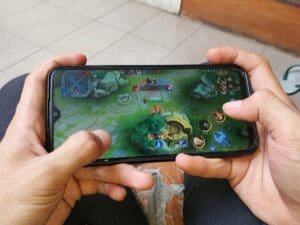
While computers and consoles are still the ultimate gaming devices, mobile phones are gradually becoming the driving force of the industry.
Developers have started creating complex, high-quality mobile games that can compete with console and PC titles, thanks to new technologies.
Gamers tend to work with smartphones because they are cheaper and more accessible than consoles and PCs. But none of that would be possible without 5G technology.
The 5G tech allows games to run smoothly on smartphones, even in graphically demanding online multiplayer titles such as Call of Duty Mobile (CODM).
CODM is one of the most popular online multiplayer games in the world. With 5G tech, players can join live matches, play with others around the world and even stream high-quality content.
It has also helped mobile eSports grow into a serious business, with competitive mobile games such as PUBG Mobile and Honour of Kings attracting massive audiences and mouth-watering prize pools.
Monetisation has also changed with more people playing mobile games. In-app purchases are still common, but players expect transparency rather than feeling pressured or into paying just to win.
This is where the line between gaming and betting apps begins to overlap. Companies such as Betfair, one of the best betting apps on trusted comparison website bettingtop10.com/gb/, are showing that similar tech can be used across different digital experiences.
Features such as real-time updates and live competition also work well for prediction-based games linked to eSports, fantasy games and other competitive digital events.
The Future of Gaming Apps Could Rely on Connected Ecosystems
Many gaming apps are already connected to other digital tools people use, such as smartwatches, foldable phones, smart home devices and payment apps.
Gamers will likely see more of this in the future. When these systems work together, it changes how players interact with games and how developers think about long-term engagement.
Wearable devices will likely be a key part of this new ecosystem. Smartwatches can send game updates to your wrist, track your progress or even link your real-world activity to in-game rewards.
Developers talk a lot about play patterns on smartwatches, highlighting the fact that people won’t need to squint at their wrists during long gaming sessions.
Companies such as Bossa Studios have already established a foothold in the industry by creating games for smartwatches. The studio is responsible for popular mobile games such as Surgeon Simulator, Thomas Was Alone and Twelve a Dozen.
They have also developed a game called Spy_Watch, which can be played on the Apple Watch. The game puts players in charge of their own virtual espionage agency.
Read more:
Online Gaming: An Entertainment Ecosystem Teeming with Opportunities