
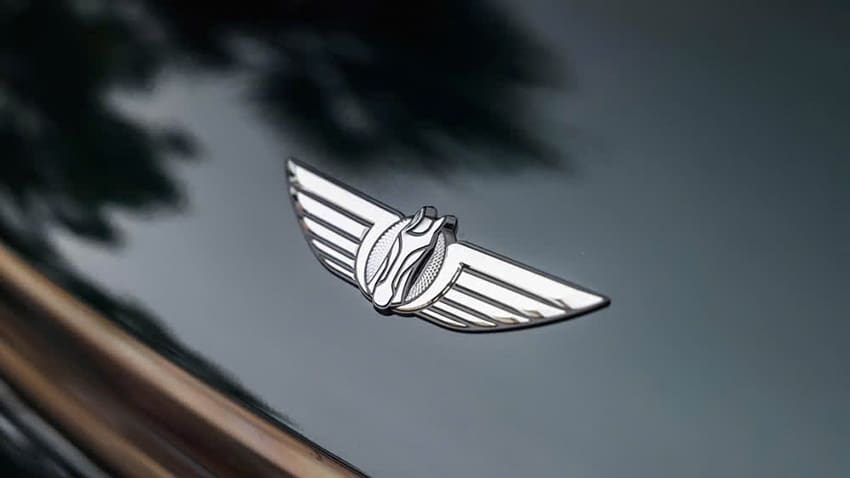

The Gaydon-based luxury marque is pressing ahead with trademark action against the Chinese conglomerate that owns a sizeable slice of its share register, in a dispute that underscores the delicate politics of cross-border automotive investment.
Aston Martin Lagonda has launched legal proceedings against Zhejiang Geely Holding Group, the Hangzhou-headquartered motor group that holds a 17 per cent stake in the British carmaker, over a winged emblem the luxury marque claims is too close for comfort to its own storied badge.
The case, which pits Britain’s most famous sports car manufacturer against one of its largest shareholders, centres on a logo Geely intends to roll out on vehicles produced by its London EV Company (LEVC) subsidiary, the Coventry-based maker of the capital’s black cabs. The design features a horse’s head set within a pair of outstretched wings, and Aston Martin contends that the overall impression sails far too close to the slender winged motif that has adorned its bonnets since 1927.
The row is not a new one, Aston Martin first raised objections in 2022, when Geely sought to register the marks with the UK Intellectual Property Office. The Gaydon firm formally opposed the application the following year, arguing infringement, only for the hearing officer to side with the Chinese group on the basis that consumers were unlikely to mistake an electric taxi for a £150,000-plus grand tourer.

That ruling did little to cool tempers at Aston Martin, and the latest legal salvo suggests the board is prepared to press the point despite the awkward shareholder dynamic. Geely acquired its 17 per cent holding for roughly $310m (£245m) in 2023, making it one of the marque’s most significant backers alongside executive chairman Lawrence Stroll’s Yew Tree consortium and Saudi Arabia’s Public Investment Fund.
For Geely, the London taxi business is a strategically important British asset. The group has been quietly assembling a portfolio of UK marques over the past decade, with Lotus now firmly in its stable alongside LEVC. Its involvement at Aston Martin was initially welcomed as a source of both capital and potential manufacturing expertise at a moment when the British firm has been burning through cash to fund its electrification programme.
The dispute also comes at a bruising time for Aston Martin’s brand stewardship. The company recently saw 007 defect to the silver screen behind the wheel of a BYD, a coup for the rival Chinese electric-vehicle maker and a blow to a marque whose cultural cachet has long been bound up with the James Bond franchise.
In public, both parties are playing down the significance of the row. Aston Martin has declined to comment further on live proceedings, while Geely has characterised the matter as a routine trademark dispute and insisted it remains committed to a professional working relationship with the Gaydon marque as both business partner and investor.
Trademark lawyers watching the case note that the outcome will hinge on whether the courts accept that the average buyer, whether of an Aston Martin DB12 or an LEVC electric cab, could be confused or whether Aston’s goodwill in the wings motif is being unfairly exploited. What is already clear is that having a Chinese partner on the share register is no guarantee of a quiet life in the intellectual property courts.
Read more:
Aston Martin takes its 17pc shareholder Geely to court over ‘copycat’ wings logo