
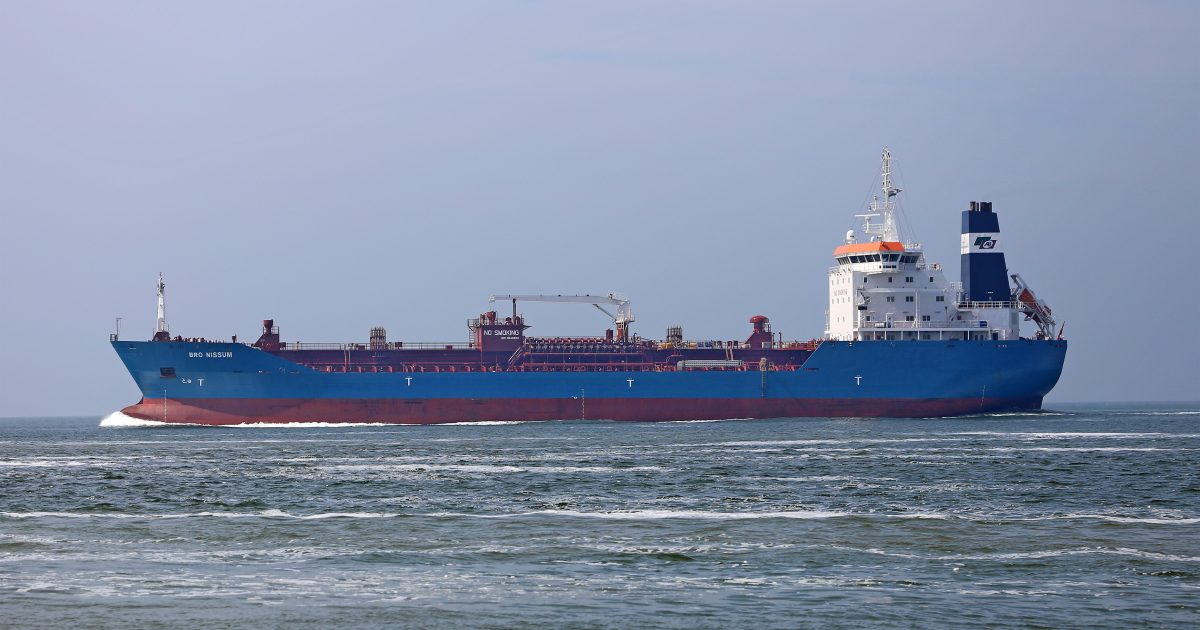


Following U.S. and Israeli strikes on Iran beginning February 28, 2026, a senior IRGC official declared the Strait of Hormuz closed and threatened to set ablaze any vessel attempting to transit. The strait is one of the most important global energy chokepoints, carrying about 20 percent of the world’s oil supply, roughly 20.3 million barrels per day in 2024.
An Iranian Revolutionary Guards commander said Iran would fire on any ship attempting to transit the vital 21-mile-wide waterway, and an IRGC senior adviser said, “The Strait of Hormuz is closed. If anyone tries to pass, the heroes of the Revolutionary Guards and the regular navy will set those ships ablaze.” The claim was later disputed by U.S. Central Command.
The threat triggered a swift and broad withdrawal from the maritime insurance market. By Monday, March 2, most of the world’s protection and indemnity (P&I) clubs, the mutual insurers that cover third-party liabilities for roughly 90 percent of the global merchant fleet, began issuing notices cancelling war risk extensions for vessels trading in the Middle East, giving 72 hours’ notice. The move was triggered by the withdrawal of reinsurance for those risks.
Japan’s MS&AD Insurance Group also suspended underwriting of war risk policies covering waters around Iran, Israel, and neighboring countries. Major shipping firms including Maersk, Hapag-Lloyd, and MSC diverted ships elsewhere.
War risk premiums surged to as high as 1 percent of a ship’s value within 48 hours, up from around 0.2 percent the prior week, adding hundreds of thousands of dollars in costs per shipment. For vessels traveling to the Persian Gulf but not planning to transit the strait, hull war cover rates also hit 1 percent of ship value for seven days, compared to around 0.25 percent before the conflict began. Hapag-Lloyd introduced a War Risk Surcharge of $1,500 per 20-foot equivalent unit for cargo to and from the Arabian Gulf.
The result was a de facto closure: by March 3, only four vessels crossed the strait, a sharp drop from the seven-day average of roughly 77 crossings. At least five tankers were damaged, two personnel killed, and around 150 ships stranded. “The war insurance market is facing what is essentially a de facto close of the Strait of Hormuz, based primarily around perception of threat rather than a tangible blockade,” said Munro Anderson of marine war insurance specialist Vessel Protect.
Oil prices rose sharply following the conflict’s outbreak, surging more than 13 percent. The benchmark freight rate for Very Large Crude Carriers, used to ship 2 million barrels of oil from the Middle East to China, hit an all-time high of $423,736 per day. The average price of gasoline in the United States rose more than 11 cents overnight to about $3.11 per gallon. Analysts warned prices could reach $120 per barrel if Gulf producers exhaust storage capacity and are forced to cut production.
Iraq had already cut output by 1.5 million barrels per day. QatarEnergy halted LNG production after its facilities in Ras Laffan and Mesaieed were struck, sending gas prices soaring in Europe and Asia.
On March 3, President Trump announced two measures via Truth Social. First, he ordered the United States Development Finance Corporation (DFC) to provide political risk insurance for all maritime trade traveling through the Gulf, particularly energy shipments, at a “very reasonable price” available to all shipping lines.
Second, he said: “If necessary, the United States Navy will begin escorting tankers through the Strait of Hormuz as soon as possible. No matter what, the United States will ensure the FREE FLOW of ENERGY to the WORLD.”
On the insurance side, JPMorgan analysts estimated that roughly 329 vessels are currently operating in the Persian Gulf, each requiring oil pollution, salvage, hull, and third-party liability insurance. That implies approximately $352 billion in maximum insurance coverage that private markets are no longer providing.
The DFC’s statutory risk exposure was $205 billion as of December 2025, meaning the potential demand already exceeds the agency’s legal capacity. Any program beyond those limits would require an act of Congress.
As of March 6, the International Underwriting Association and the International Union of Marine Insurers clarified that war risk cover remains available on a single-voyage basis under a specific agreement, but warned that “insurers will regularly re-examine their ability and willingness” to provide cover in the current fast-moving situation.
European nations have also begun deploying additional naval and air-defense forces to the region. France is sending the aircraft carrier Charles de Gaulle and additional escorts to the Eastern Mediterranean. British F-35s and Typhoon fighters and French Rafale jets have been defending airspace over Cyprus, Jordan, Qatar, and UAE facilities. Air-defense systems across the region have intercepted more than 1,000 Iranian drones and several hundred missiles since the conflict began.
France, Germany, and the United Kingdom issued a joint statement condemning Iran’s missile campaign and warning they are prepared to take further defensive action, coordinating with the United States and regional allies to counter Iranian missile and drone capabilities at their sources if necessary.
Assuming President Trump can make the U.S. government-backed insurance program work, it will provide a tremendous amount of revenue for the United States. It also cuts Britain and other countries out of the maritime insurance game. The last time the Houthis were attacking ships going through the strait, they gave China safe passage, which gave Beijing a near monopoly on shipping.
But this time around, President Trump will be keeping the strait open for everyone, and he claims it will be at a reasonable cost. This should keep everyone in the game, not just China. Additionally, U.S. naval patrols escorting ships would hopefully deter attacks and help maintain security in the region.
The post Trump’s Gulf of Hormuz Maritime Security and Insurance Proposal appeared first on The Gateway Pundit.