
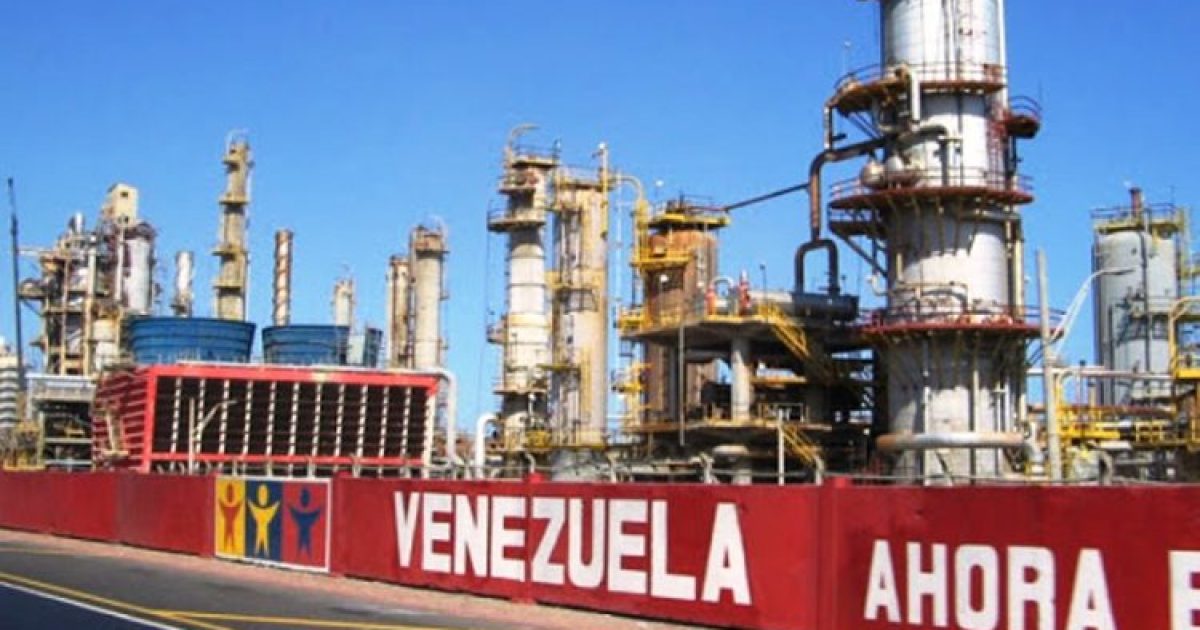

The Trump administration has launched a series of actions to advance the President’s plan to reopen and modernize Venezuela’s oil industry, positioning U.S. companies to play a central role in its redevelopment. Through new general licenses issued by the Treasury Department’s Office of Foreign Assets Control, Washington is expanding U.S. participation in Venezuela’s oil and gas sector while establishing oversight mechanisms to ensure revenues are managed transparently.
On January 29, OFAC issued General License 46, authorizing U.S.-incorporated firms to market Venezuelan oil globally, including in the United States. Payments must be made on commercially reasonable terms and deposited into U.S.-based accounts overseen by the Departments of State and Treasury to ensure funds benefit the Venezuelan people rather than corrupt actors. General License 48, issued February 10, permits U.S. companies to provide goods, equipment, and services to repair and upgrade Venezuela’s oil and gas infrastructure.
Venezuela holds some of the world’s largest proven oil reserves, but years of political instability, corruption, economic mismanagement, chronic underinvestment, and international sanctions have severely degraded its energy sector. The administration argues that reopening the industry will increase production, modernize infrastructure, strengthen U.S. supply lines within the Western Hemisphere, and support Venezuela’s broader economic recovery.
The strategic timing is significant. As Mexico redirects more of its heavy crude to domestic refining, imports of Mexican Maya crude to the U.S. Gulf Coast are expected to decline. Gulf Coast refineries are specifically designed to process heavy crude, historically sourced from Canada, Mexico, and Venezuela. This creates an opening for increased Venezuelan supply.
Following the capture of Nicolás Maduro and President Trump’s pledge to expand U.S. involvement in Venezuela’s oil sector, refiners began evaluating greater imports. Some, including Valero, have already increased Venezuelan crude purchases as sanctions ease. Venezuelan barrels are currently trading at a discount to Canadian crude in Houston, though long-term demand will ultimately depend on pricing and market economics.
The Treasury Department continues to restrict sales to certain countries, including China, which became Venezuela’s largest buyer during the sanctions period.
Oil companies remain cautious about large-scale investments, seeking legal, financial, and security assurances before committing billions to new development. ExxonMobil and ConocoPhillips are still pursuing arbitration claims after their assets were seized in 2007. Chevron, the only U.S. company currently authorized to operate in Venezuela, produces about 250,000 barrels per day and could potentially increase output by roughly 50 percent over the next two years without major capital spending.
If the revival succeeds, Texas refineries are likely to play a central role. Beyond heavy crude from the Orinoco Belt, Venezuela also holds lighter crude reserves in the Maracaibo Basin, potential shale formations comparable to those developed in Texas’ Permian Basin, and offshore natural gas discoveries. Expanding production across these sectors would be essential to any durable economic recovery.
Yet the scale of decay is substantial. A recent example illustrates the challenge. A large drilling rig transported from China to Lake Maracaibo struck an oil pipeline while entering the lake, causing a leak that went unrepaired for months. The incident underscored that even basic efforts to restore operations are complicated by deteriorated infrastructure. Decades of underinvestment and mismanagement have left pipelines corroded, facilities unreliable, and environmental damage widespread.
Initial projects focus on refurbishing old wells, repairing pipelines and ports, and restarting crude upgraders. In practice, these efforts face missing technical data, insufficient natural gas to maintain well pressure, equipment shortages, and degraded support systems.
In the Orinoco Belt, producing extra-heavy crude requires either specialized upgraders or imported diluents. Only a small portion of joint ventures have access to upgraders, and facilities such as Chevron’s Petropiar require significant overhauls before output can meaningfully increase.
Security concerns, fragile supply chains, legal uncertainty, and the possibility of future policy shifts add further risk. Although recent oil law reforms grant foreign firms greater autonomy, investors remain wary that future political changes could alter contractual terms.
Some analysts believe the opportunity outweighs the risks, arguing that fields long considered depleted may still contain significant recoverable reserves if modern technology and management practices are applied. The coming year will determine whether Venezuela achieves a historic production recovery or continues struggling to convert vast reserves into sustained output.
The post All About Venezuelan Oil and the New Opportunities Created by President Trump appeared first on The Gateway Pundit.